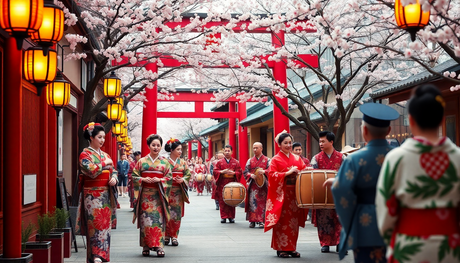

Japan is a country that celebrates its seasons with extraordinary grace — and few traditions capture that spirit more beautifully than Hinamatsuri (雛祭り). Each year on March 3rd, families across Japan pause to honor something deeply precious: their daughters. Shelves fill with tiers of silk-robed dolls, kitchens come alive with festive sweets, and the quiet ritual of displaying the hina dolls becomes a small, tender ceremony of love.
Whether you're discovering Hinamatsuri for the first time or looking to deepen your appreciation of Japanese culture, this guide covers everything — from its ancient origins to the foods on the table and the customs that make March 3rd one of the most heartwarming days on Japan's cultural calendar.
What Is Hinamatsuri?
Every year on March 3rd, homes across Japan transform into miniature royal courts draped in crimson and gold. This beloved celebration is Hinamatsuri (雛祭り) — also known as the Doll Festival or Girls' Day — a centuries-old tradition dedicated to wishing daughters a life of happiness, health, and prosperity.
If you've ever been curious about one of Japan's most visually stunning seasonal festivals, you're in the right place. Let's dive in.
A Brief History: Where Did Hinamatsuri Come From?
Hinamatsuri's origins trace back over a thousand years to an ancient Chinese purification ritual, in which paper dolls were floated down rivers to carry away evil spirits and misfortune. The Japanese adapted this practice into what became known as nagashi-bina (流し雛) — "floating dolls."
By the Heian period (794–1185 CE), Japan's aristocratic court had developed an elaborate tradition of doll play among noble girls, blending ritual purification with courtly aesthetics. It was during the Edo period (1603–1868) that the festival took the form we recognize today, with tiered doll displays becoming standard and doll-making evolving into a sophisticated, highly prized craft.
The Hina Doll Display: A Miniature Imperial Court
The centerpiece of any Hinamatsuri celebration is the hina doll set, arranged on a red-carpeted staircase platform called a hina-dan (雛壇). A traditional full set features up to fifteen dolls across seven tiers, each representing a level of the imperial court hierarchy:
- Tier 1 — The Emperor and Empress, seated before golden folding screens
- Tier 2 — Three court ladies holding sake vessels
- Tier 3 — Five male musicians playing traditional instruments
- Tier 4 — Two imperial ministers
- Tier 5 — Three samurai guardsmen
- Tiers 6 & 7 — Miniature furniture, ox-carts, and decorative accessories
Many modern families opt for simpler two-tier or single-tier sets, but the spirit remains the same: a beautiful act of love and protection for the family's daughters.

Traditional Hinamatsuri Foods You Have to Try
No Japanese festival is complete without its signature foods, and Hinamatsuri is no exception. Each dish carries symbolic meaning tied to luck, beauty, and prosperity.
Chirashi-zushi — A festive bowl of seasoned sushi rice topped with shrimp (longevity), lotus root (clear foresight), and egg crepes (gold and wealth). Colorful, delicious, and the star of the Hinamatsuri table.
Hishi-mochi — Diamond-shaped layered rice cakes in three colors: green (health), white (purity), and pink (warding off evil). They beautifully mirror the natural world's transition from winter into spring.
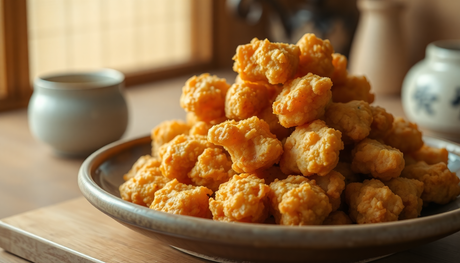
Hina-arare — Sweet or savory puffed rice crackers in pastel pink, white, and green — a perfect snack for little ones throughout the day.
Amazake — A warm, creamy, naturally sweet fermented rice drink. In its non-alcoholic form, it's enjoyed by the whole family, children included.
Hamaguri clam soup — Served as a symbol of harmonious marriage, since only the two halves of the exact same clam fit perfectly together — a beautiful metaphor for lifelong partnership.
How to Celebrate Hinamatsuri
Whether you're in Japan or celebrating from abroad, here are some meaningful ways to mark the occasion:
- Display hina dolls — Set them up in mid-February and take them down promptly after March 3rd (leaving them out too long is said to delay a daughter's marriage!).
- Cook together — Prepare chirashi-zushi and hina-arare as a family activity.
- Dress up — Many families dress daughters in kimono for the day.
- Attend a nagashi-bina ceremony — In some regions, the ancient ritual of floating paper dolls down rivers is still practiced.
Final Thoughts
Hinamatsuri is far more than a festival of dolls. It is an annual expression of parental love, a living thread connecting modern Japan to its ancient past, and a celebration of the hope families pour into their daughters' futures. From the meticulously arranged hina-dan to the fragrant chirashi-zushi and sweet hina-arare, every element of the festival carries meaning accumulated over more than a thousand years.
This March 3rd, whether you're in Tokyo or far from Japan, why not bring a little piece of the Doll Festival into your home?